
 GriffNode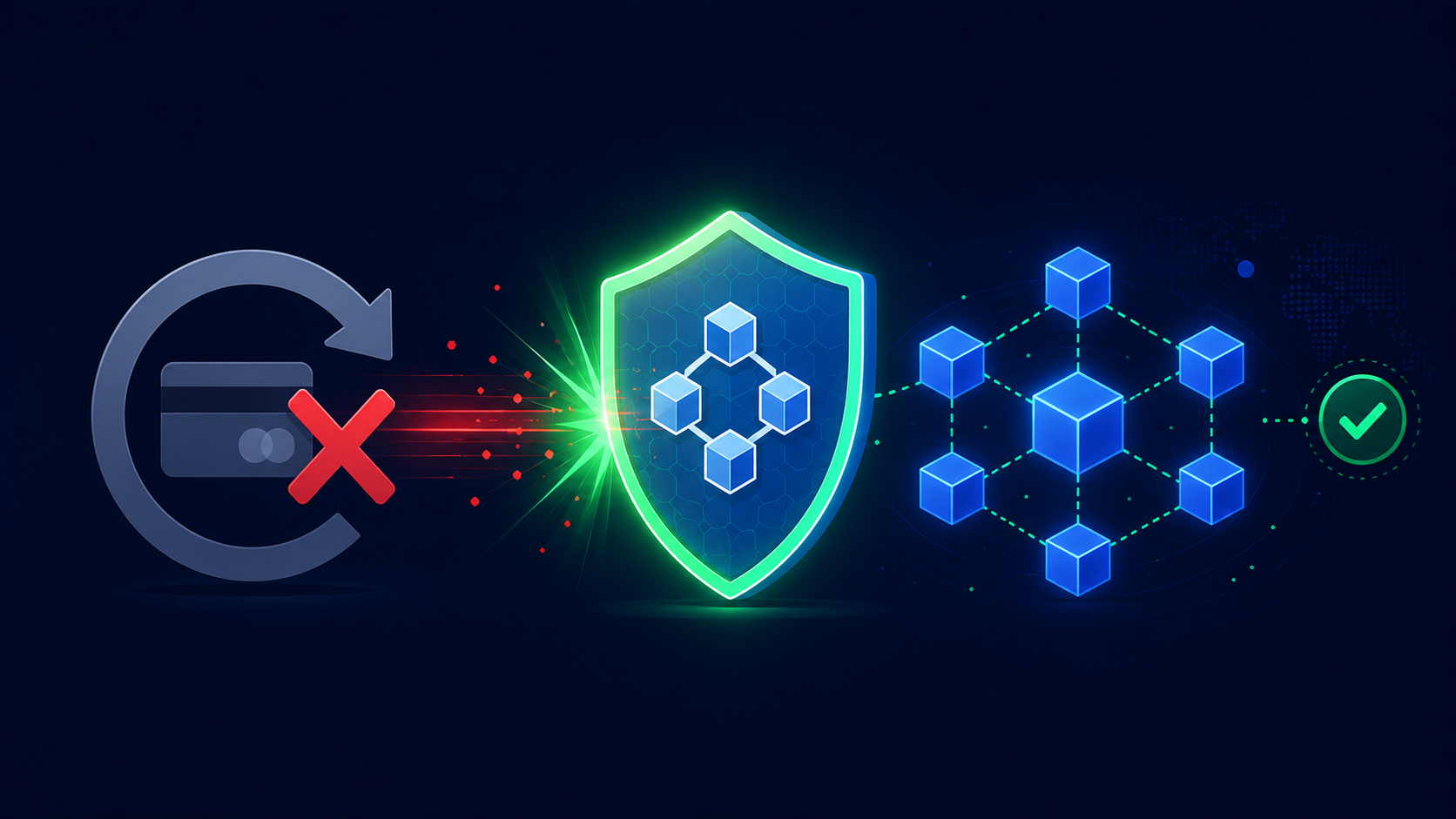
Crypto payments eliminate chargebacks because confirmed blockchain transactions are irreversible: there is no bank, card network, or intermediary that can force the money back out of your account. Chargebacks cost merchants over $125 billion a year, and most of that is friendly fraud, a buyer who got the product but disputes the charge anyway. Crypto removes the dispute mechanism entirely, and with GriffNode funds settle straight to your own wallet at 0% gateway fees. Here is how and why it works.
What Is a Chargeback?
A chargeback is a forced transaction reversal initiated by a cardholder through their bank. The customer contacts their card issuer, claims the charge was unauthorized or the product was not delivered, and the bank reverses the payment, taking the money back from you without your consent.
Unlike a refund, which you choose to issue, a chargeback is imposed on you. You can contest it, but the process is slow, evidence-heavy, and weighted toward the cardholder, and you pay a non-refundable dispute fee whether you win or lose.
The Scale of the Problem
In 2025, global chargeback losses exceeded $125 billion. For every $100 in chargebacks, merchants lose an additional $200 in fees, labor, and lost merchandise. Industries like digital goods, software, and supplements face chargeback rates 3-5x the industry average.
The damage is not only the disputed amount. Card networks track your chargeback ratio, and once it crosses roughly 1% you face higher fees, monitoring programs, and ultimately termination of your merchant account, which can take your whole business offline overnight.
Why Crypto Eliminates Chargebacks
Blockchain transactions are irreversible by design. Once a Bitcoin or USDT transaction confirms on-chain, no third party can reverse it: not the customer, not their bank, not the payment processor. The customer does not have a dispute this charge button for a crypto payment because there is no intermediary to file the dispute with.
This is not a policy decision; it is a property of how blockchains work. A confirmed transaction is recorded permanently across thousands of nodes, and there is no central authority that can override it. The chargeback does not get harder to win, it stops existing.
What About Fraud?
With cards, merchants bear most of the fraud risk. A stolen card number can result in a chargeback weeks later, and the merchant loses both the product and the payment.
With crypto, the customer must authorize the transaction from their own wallet. There is no card number to steal that can be charged remotely. Crypto payment fraud directed at merchants is effectively zero; the risk sits on the customer side (keeping their wallet secure), not yours.
Friendly Fraud: The 60-80% You Cannot Win
A significant portion of chargebacks is friendly fraud: customers who received their product but dispute the charge anyway to get it for free. Studies estimate friendly fraud represents 60-80% of all chargebacks. Crypto eliminates this entirely. You fulfilled the order, the customer paid, the transaction is on-chain; there is nothing to dispute.
This matters most for digital goods, where the buyer can download an ebook, complete a course, or activate a software licence and still claim non-delivery. See crypto payments for digital products for how creators lock this down.
Chargebacks vs Crypto Refunds at a Glance
| Card chargeback | Crypto refund | |
|---|---|---|
| Who decides | The bank, against you | You |
| Can you refuse | No | Yes |
| Dispute fee | $15-100 per case, win or lose | None |
| Friendly fraud exposure | High (60-80% of disputes) | None |
| Account-termination risk | Yes, above ~1% ratio | No |
| Timeframe to reverse | Up to 120 days later | n/a (no reversal possible) |
What Happens If a Customer Has a Genuine Complaint?
You still handle refunds and customer service; that does not change. The difference is that refunds are voluntary and on your terms. You process them when you choose to, not because a bank forces a reversal on you. You retain control of the resolution process, send the funds back to the customer's wallet, and keep a clean payment record.
High-Risk Merchant Categories
If your business is classified as high risk by card processors (digital downloads, supplements, SaaS, adult content, firearms accessories), you pay higher fees and are at greater risk of having your merchant account terminated. Crypto payments have no concept of high-risk categories. Everyone pays the same rate, and no acquiring bank can drop you for the industry you are in. This is closely tied to the wider debanking problem.
The Cost Side: No Chargeback Fees, No Percentage Cut
Removing chargebacks also removes a stack of associated costs: the per-dispute fee, the labour of fighting disputes, and the lost merchandise. On top of that, GriffNode charges 0% per transaction on a flat monthly plan, compared with the 2.9% plus 30 cents and per-dispute fees of card processing. For the full breakdown, see our crypto payment gateway fees guide.
Summary
Crypto payments do not reduce chargebacks; they eliminate them completely. If eliminating chargeback fraud, friendly fraud, and the associated fees is a priority for your business, adding crypto checkout is the most direct solution available. Create a free GriffNode account, or add it to your store with our Shopify crypto payments guide or WooCommerce setup guide.
Related reading: Operation Choke Point 2.0 explained and What is debanking?
Frequently Asked Questions
Can you get a chargeback on a crypto payment?
No. Once a crypto transaction confirms on-chain it is irreversible and there is no bank or card network to file a dispute with. The buyer has no dispute-this-charge button, so chargebacks cannot occur on crypto payments.
Why are crypto payments irreversible?
Because a confirmed transaction is recorded permanently across thousands of independent nodes with no central authority able to override it. Reversibility is not a setting that can be toggled; it is a structural property of how blockchains reach consensus.
What is friendly fraud and does crypto stop it?
Friendly fraud is when a customer who actually received the product disputes the charge anyway to get it free. It is 60-80% of all chargebacks. Crypto stops it completely, because there is no dispute mechanism for the buyer to abuse.
If there are no chargebacks, how do legitimate refunds work?
You issue refunds yourself by sending a new transaction to the customer's wallet. You stay in control: full or partial, whenever you decide, with no forced reversal and no per-dispute fee.
How much do chargebacks cost merchants?
Global chargeback losses topped 125 billion dollars in 2025, and merchants lose roughly 200 dollars in fees, labour, and lost goods for every 100 dollars charged back. High-risk categories see rates several times the average.
Does eliminating chargebacks help high-risk merchants?
Significantly. Card processors charge high-risk businesses more and can terminate the account if the chargeback ratio climbs. Crypto has no high-risk categories and no chargeback ratio, so there is no acquiring bank that can drop you.
What GriffNode costs
GriffNode charges a flat monthly fee and takes no percentage of your sales. Starter is free, Business is $49 a month and Professional is $129 a month. Process $1,000 or $1,000,000 and the price does not change. See the pricing page for what each plan includes, or work out what your current processor is really costing you with the crypto fee calculator and the chargeback cost calculator.