
 GriffNode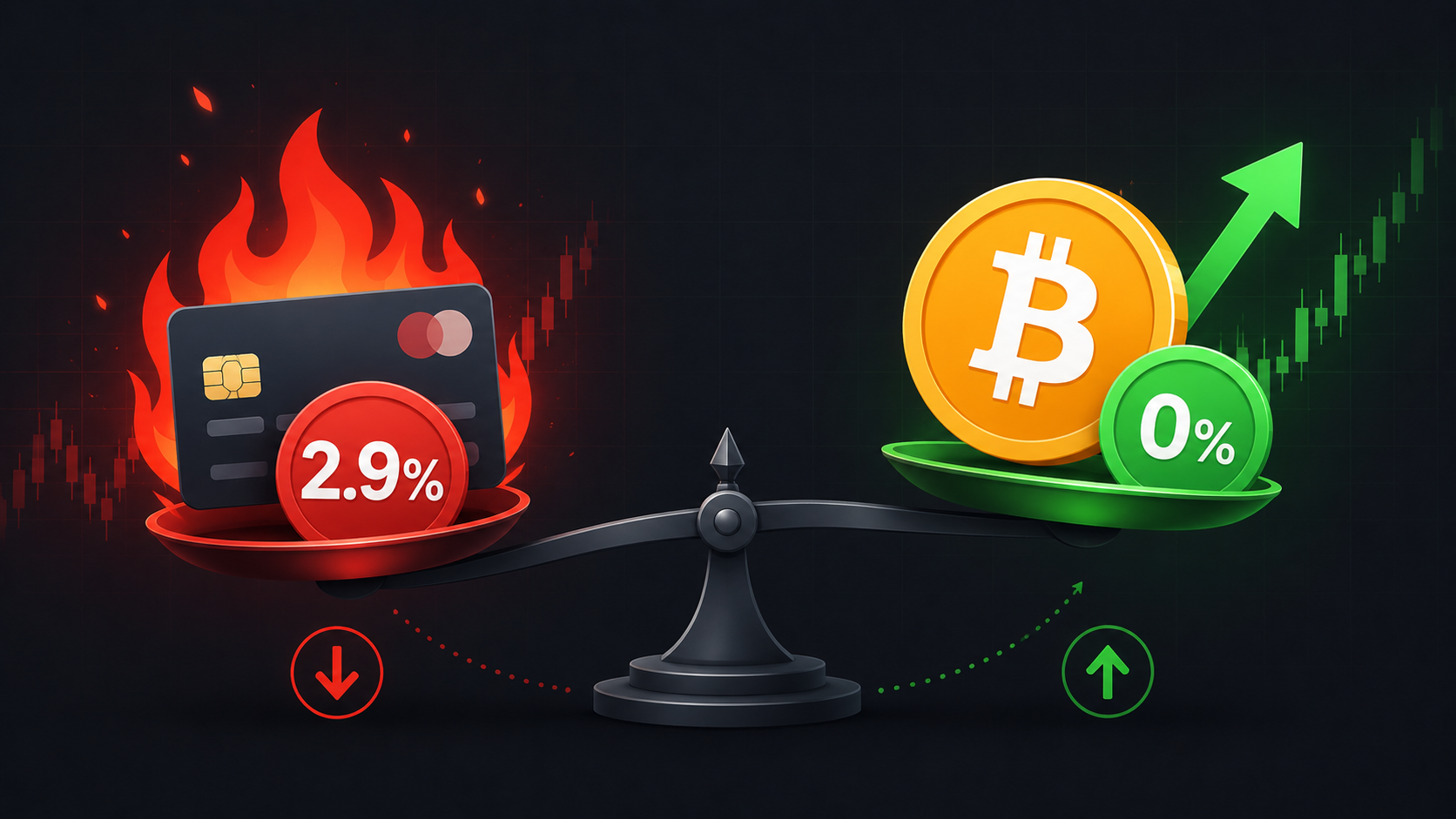
Crypto payment gateway fees come in two layers: the gateway fee the processor charges you (0% to ~1% per sale, or a flat monthly plan) and the blockchain network fee your customer pays to miners (cents to a few dollars). Custodial gateways like BitPay and Coinbase Commerce take about 1%, NOWPayments 0.5-1%, while GriffNode charges 0% per transaction on a flat monthly plan and settles straight to your wallet. This guide breaks down every fee type and compares the real cost against card processing.
The Two Fee Types Every Merchant Must Understand
When evaluating crypto payment gateways, you will encounter two fundamentally different categories of fees:
- Gateway fees - what the payment processor charges you for their service
- Network fees - what the blockchain charges to process the transaction itself
These are completely separate. Confusing them is one of the most common mistakes merchants make when comparing options. A gateway might advertise a 1% fee, but that is on top of the blockchain network fee your customer pays.
Gateway Fees: What Each Provider Charges You
Per-Transaction Percentage
Most custodial gateways take a cut of every sale:
| Gateway | Per-transaction fee | Custodial? |
|---|---|---|
| BitPay | 1% | Yes |
| Coinbase Commerce | 1% | Yes |
| NOWPayments | 0.5-1% | Yes |
| CoinPayments | 0.5% | Yes |
| GriffNode | 0% (flat monthly plan) | No - direct to your wallet |
At 1%, a merchant processing $50,000/month pays $500 in gateway fees alone. At 0%, that is $6,000 saved per year, before you factor in the elimination of chargebacks.
Monthly Platform Fees
Some gateways charge a flat monthly fee on top of per-transaction fees. GriffNode uses flat monthly plans only, with no transaction percentage at any volume, so a merchant doing $5,000/month and one doing $500,000/month pay the same plan fee.
Settlement and Conversion Fees
If you want to receive fiat currency (USD, EUR) instead of crypto, custodial gateways charge a conversion spread, typically 0.5-1% on top of the transaction fee. This is unavoidable with any gateway if you want automatic fiat conversion.
The cheapest route: receive crypto directly into your wallet and convert yourself through an exchange at the best available rate. You choose when and where to convert, and you keep the spread.
Withdrawal and Payout Fees
Custodial gateways often charge fees for withdrawing your funds to your bank account or wallet. GriffNode has no withdrawal fee, because funds never enter GriffNode's system in the first place.
Network Fees: What the Blockchain Charges
Network fees are paid by the customer sending the transaction, not by you. They go to blockchain miners or validators, not to any gateway. As of 2026:
| Cryptocurrency | Typical Network Fee | Best For |
|---|---|---|
| Bitcoin (BTC) | $1-8 (varies with congestion) | Large transactions ($100+) |
| Ethereum (ETH) | $1-20 (gas fees fluctuate) | Medium transactions, DeFi users |
| Litecoin (LTC) | $0.01-0.05 | Small payments, frequent transactions |
| Dogecoin (DOGE) | ~$0.01 | Micro-payments, tips |
| Dash (DASH) | ~$0.01 | Instant payments (InstantSend) |
| USDT / USDC | Varies by chain | Stable-value invoices |
For merchants accepting small purchases under $20, Bitcoin and Ethereum can be poor choices because the network fee represents a significant percentage of the transaction. Litecoin or Dogecoin make more sense economically for low-value goods.
The Cost Nobody Talks About: Chargebacks
Card processors do not just charge 2-3% per transaction. They also expose you to chargebacks:
- Average chargeback fee: $20-100 per dispute
- You can lose both the payment and the goods or service already delivered
- High chargeback rates lead to account termination
- Industries like digital goods, travel, and subscription services have especially high chargeback exposure
Crypto payments are irreversible. Once confirmed on-chain, a transaction cannot be disputed or reversed. Chargeback risk is zero, permanently and by design. See how crypto payments eliminate chargebacks for the full mechanism.
Real Cost Comparison at $20,000/Month Volume
| Payment Method | Transaction Fee | Monthly Cost | Chargebacks |
|---|---|---|---|
| Stripe | 2.9% + 30c | ~$640 | Yes, $15+ per dispute |
| PayPal | 3.49% + 49c | ~$798 | Yes, $20+ per dispute |
| Square | 2.6% + 10c | ~$540 | Yes |
| BitPay | 1% | ~$200 | No |
| GriffNode | 0% | Flat plan fee only | No |
At $20,000/month, switching from Stripe to a 0% gateway saves roughly $600/month, around $7,200/year, before counting any chargeback costs avoided.
What Does GriffNode's Pricing Actually Look Like?
GriffNode uses flat monthly plans with no per-transaction percentage at any volume. Higher tiers unlock features like webhooks, higher transaction limits, and priority support, all at a flat monthly fee that does not scale with your revenue.
A merchant processing $5,000/month and one processing $500,000/month pay the same plan fee. Your fees do not grow with your success. (For current plan details, see the GriffNode signup page.)
Summary: Choosing the Right Gateway on Fees Alone
If cost is your primary criterion:
- Zero transaction fees + no chargebacks: GriffNode (non-custodial, direct to wallet)
- Low transaction fees + optional fiat: NOWPayments or CoinPayments
- Fiat conversion built in: BitPay or Coinbase Commerce (1% + spread)
- Card processing as fallback: Stripe or Square (2.6-2.9%, chargebacks included)
Ready to move? Read our Shopify crypto payments guide or learn how to accept crypto on WooCommerce, and compare the savings against cross-border card and wire fees.
Frequently Asked Questions
What fees does a crypto payment gateway charge?
Two kinds. The gateway fee is what the processor charges you, ranging from 0% on a flat-plan provider like GriffNode to about 1% with custodial gateways such as BitPay or Coinbase Commerce. The network fee is paid by your customer to the blockchain and ranges from a cent on Litecoin to a few dollars on Bitcoin.
Is a 0% crypto payment gateway really free?
The per-transaction fee is 0%, but GriffNode charges a flat monthly plan instead of a percentage. Because the plan does not scale with your revenue, the more you process the cheaper it is per sale compared with a 1% or 2.9% model.
Who pays the blockchain network fee, me or the customer?
The customer pays the network fee when they send the transaction. It goes to miners or validators, not to the gateway. You can steer customers toward low-fee coins like Litecoin or Dogecoin for small purchases.
How do crypto gateway fees compare to Stripe or PayPal?
Cards typically cost 2.6-3.5% plus a fixed fee per transaction, plus chargeback fees of $15-100 per dispute. A crypto gateway charges 0-1% with no chargebacks at all, so at $20,000 per month a merchant can save roughly $600 versus Stripe before counting avoided disputes.
Are there hidden conversion or withdrawal fees?
With custodial gateways, yes: converting crypto to fiat adds a 0.5-1% spread and withdrawals can carry a fee. GriffNode is non-custodial, so funds settle to your wallet directly with no conversion or withdrawal fee, and you choose if and when to convert.
Do gateway fees increase as my sales grow?
With percentage-based gateways they do. With a flat monthly plan they do not: a merchant doing $5,000 and one doing $500,000 a month pay the same plan fee, so your effective rate keeps falling as you grow.
Related reading
- Crypto payments vs credit cards: what each one really costs you per sale.
- Crypto payments merchant FAQ: the questions merchants ask before switching.
What GriffNode costs
GriffNode charges a flat monthly fee and takes no percentage of your sales. Starter is free, Business is $49 a month and Professional is $129 a month. Process $1,000 or $1,000,000 and the price does not change. See the pricing page for what each plan includes, or work out what your current processor is really costing you with the crypto fee calculator and the chargeback cost calculator.