
 GriffNode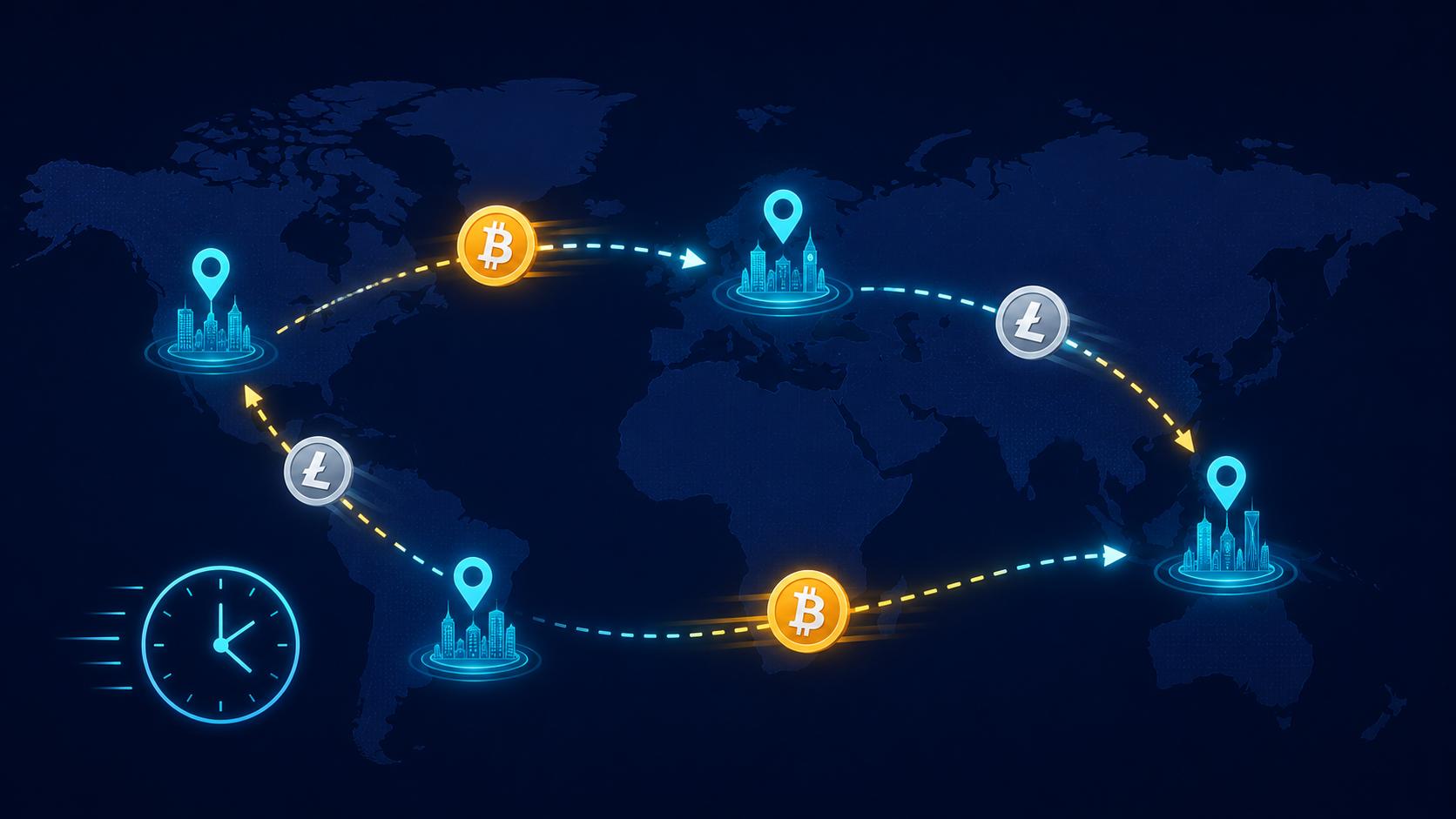
Cross-border crypto payments let international merchants get paid in minutes for cents, without bank wires, currency-conversion spreads, or cards that decline abroad. A payment from Tokyo to Warsaw clears on the same blockchain as a domestic one. With GriffNode, funds settle straight to your own wallet at 0% gateway fees on a flat monthly plan, so you keep the full amount every international customer sends.
The Real Cost of International Card and Bank Payments
If you sell to customers in other countries, every payment comes with hidden costs the customer and often you pay:
- Card international surcharge: 1.5-3% added by Stripe/PayPal for foreign cards
- Currency conversion spread: 1-2% on top of the mid-market exchange rate
- Card decline rates: international cards decline at 10-25% rates depending on issuing country and card network
- Wire transfer fees: $20-60 per outgoing transfer plus correspondent bank fees plus currency conversion
- Settlement delays: 2-5 business days for international bank transfers; longer for some corridors
For a service provider billing $5,000 to a client abroad, the combined cost of international card fees, conversion spread, and decline-and-retry friction can exceed $200 per transaction.
Why Crypto Works for Cross-Border Payments
Cryptocurrency has no concept of national borders. A Bitcoin transaction from a buyer in Brazil to a merchant wallet in Poland is identical to a domestic transaction: same network, same fees, same confirmation time. The blockchain does not know or care what country either party is in.
The practical benefits:
- Zero currency conversion fees: the exchange rate is embedded in the transaction; no bank takes a spread
- Universal acceptance: anyone with a crypto wallet can pay, regardless of their country's card infrastructure
- No bank account required: neither party needs a bank, just a wallet
- Settlement in minutes: not 3-5 business days
- No payment declines: crypto transactions do not decline the way cards do
Which Markets Benefit Most from Crypto Payment Options?
If your customers are in any of these regions, accepting crypto across borders is especially valuable:
- Latin America (Argentina, Brazil, Venezuela, Mexico): high card decline rates, currency controls, local inflation driving crypto adoption
- Southeast Asia (Philippines, Vietnam, Indonesia): large unbanked population, heavy remittance corridor usage
- Africa (Nigeria, Kenya, Ghana, South Africa): among the fastest-growing crypto adoption globally; card infrastructure unreliable in many areas
- Eastern Europe: high crypto literacy, some Stripe-restricted countries
- Middle East: crypto increasingly used to navigate currency restrictions
Merchants who add crypto checkout frequently report that it unlocks sales from markets that were previously converting at near-zero rates due to card failures.
How Much Do Cross-Border Crypto Payments Cost vs Wires and Cards?
The headline difference: card and wire costs scale with the value you move, while a flat-plan crypto gateway does not. Here is how the per-transaction economics compare for international payments. To price your own case, put your monthly volume into the crypto fee calculator.
| Method | Cost on $5,000 international payment | Settlement | Chargebacks |
|---|---|---|---|
| Bank wire | $20-60 + correspondent + FX spread | 1-5 days | n/a (slow + manual) |
| Stripe / PayPal card | ~2.9-3.5% + FX surcharge ($150-200+) | 2-7 days | Yes, up to 120 days |
| BitPay / Coinbase Commerce | ~1% gateway ($50) + conversion spread | Minutes-hours | No |
| NOWPayments | ~0.5-1% ($25-50) | Minutes | No |
| GriffNode | 0% gateway (flat monthly plan) | Minutes | No |
For a full breakdown of every charge a gateway can apply, see our crypto payment gateway fees guide.
What About Exchange Rate Risk on International Crypto Payments?
This is the most common concern when accepting cross-border crypto payments: if a customer pays in BTC and the price drops before you convert, you receive less than expected.
Several approaches manage this:
- Hold crypto: if you expect prices to appreciate, hold the payment as-is. The risk is also an opportunity.
- Convert immediately: sell the received crypto on an exchange within minutes of receipt. With BTC/ETH on major exchanges the spread is typically 0.1-0.3%, far less than card international fees.
- Stablecoins: accept USDT or USDC, pegged to the US dollar. Zero volatility, same crypto speed and borderlessness.
Crypto vs International Wire Transfer: A Direct Comparison
| Bank Wire Transfer | Crypto (via GriffNode) | |
|---|---|---|
| Fee per transaction | $20-60 outgoing + recipient fees | Network fee (~$1-8 BTC, ~$0.01 LTC) |
| Settlement time | 1-5 business days | Minutes |
| Currency conversion | Bank spread (1-3%) | Optional, at your chosen exchange |
| Bank account required | Both parties must have accounts | Neither party needs a bank |
| Geographic restrictions | SWIFT sanctions, correspondent limits | None |
| Reversibility | Chargeback possible up to 60-120 days | Irreversible after confirmation |
Practical Setup for International Merchants
1. Display Prices in USD (or your home currency)
Do not display prices in BTC or ETH; the amounts look confusing and shift with the market. Display in USD, EUR, or your home currency. GriffNode converts to the current crypto equivalent at the time of checkout.
2. Set a Reasonable Payment Window
International customers may be in a different time zone or have slower internet. A 60-minute payment window (configurable in GriffNode) gives them enough time without leaving the exchange rate exposed for too long.
3. Accept Low-Fee Coins for Small Transactions
For orders under $100, recommend Litecoin or Dogecoin to your customers; network fees are under $0.05. Bitcoin's $1-8 fee is disproportionate on a $20 transaction. Make this clear at checkout.
4. Communicate Clearly About Crypto
Many international customers are crypto-comfortable but unfamiliar with the checkout flow. A brief How to pay with Bitcoin FAQ on your site reduces drop-off. The GriffNode hosted payment page handles the technical side, but customers need to know they need a wallet app before they reach checkout.
The No-KYC Advantage for International Customers
International customers often face excessive friction with KYC-heavy platforms, especially in markets where documentation requirements do not match what the platform expects. GriffNode requires no verification from merchants or their customers. There is no identity gate between an international buyer and your checkout.
Already Selling on Shopify or WooCommerce?
If your store runs on a major platform, you can add a cross-border crypto option without custom code. Follow our Shopify crypto payments guide or our guide to accepting crypto on WooCommerce. To remove disputes entirely, read how crypto payments eliminate chargebacks.
Start Accepting Cross-Border Crypto Payments
Add GriffNode to your checkout today: free account, no identity verification, direct-to-wallet settlement. Create your account and test it with your next international customer, then measure the difference in conversion rate versus card payment.
Frequently Asked Questions
How do cross-border crypto payments work for merchants?
A customer abroad pays from their wallet to a payment address you generate at checkout. The transaction settles on the blockchain in minutes regardless of country, and the funds arrive directly in your own wallet. There is no bank, no SWIFT routing, and no currency-conversion spread.
Are international crypto payments cheaper than bank wires?
Almost always. A bank wire costs $20-60 plus correspondent and FX charges and takes days. A crypto payment costs only the on-chain network fee (a few cents on Litecoin, a few dollars on Bitcoin) and clears in minutes. With GriffNode the gateway itself takes 0% on a flat monthly plan.
Will my customer's card-decline problem go away with crypto?
Yes. Crypto transactions do not decline the way international cards do. Anyone with a wallet can pay you, which unlocks markets where card approval rates are low, such as parts of Latin America, Africa, and Southeast Asia.
How do I handle exchange-rate risk on international payments?
Convert the received crypto to fiat within minutes on an exchange, or accept stablecoins like USDT and USDC that hold a stable dollar value. Either approach keeps your costs far below international card FX fees.
Do international customers need to pass KYC to pay me in crypto?
No. GriffNode is non-custodial and requires no identity verification from you or your customers. There is no documentation gate between an international buyer and your checkout.
Which coins are best for cross-border payments?
For larger invoices Bitcoin and Ethereum are widely held. For smaller orders Litecoin and Dogecoin keep network fees near a cent. Stablecoins like USDT and USDC remove price volatility for both sides.