
 GriffNode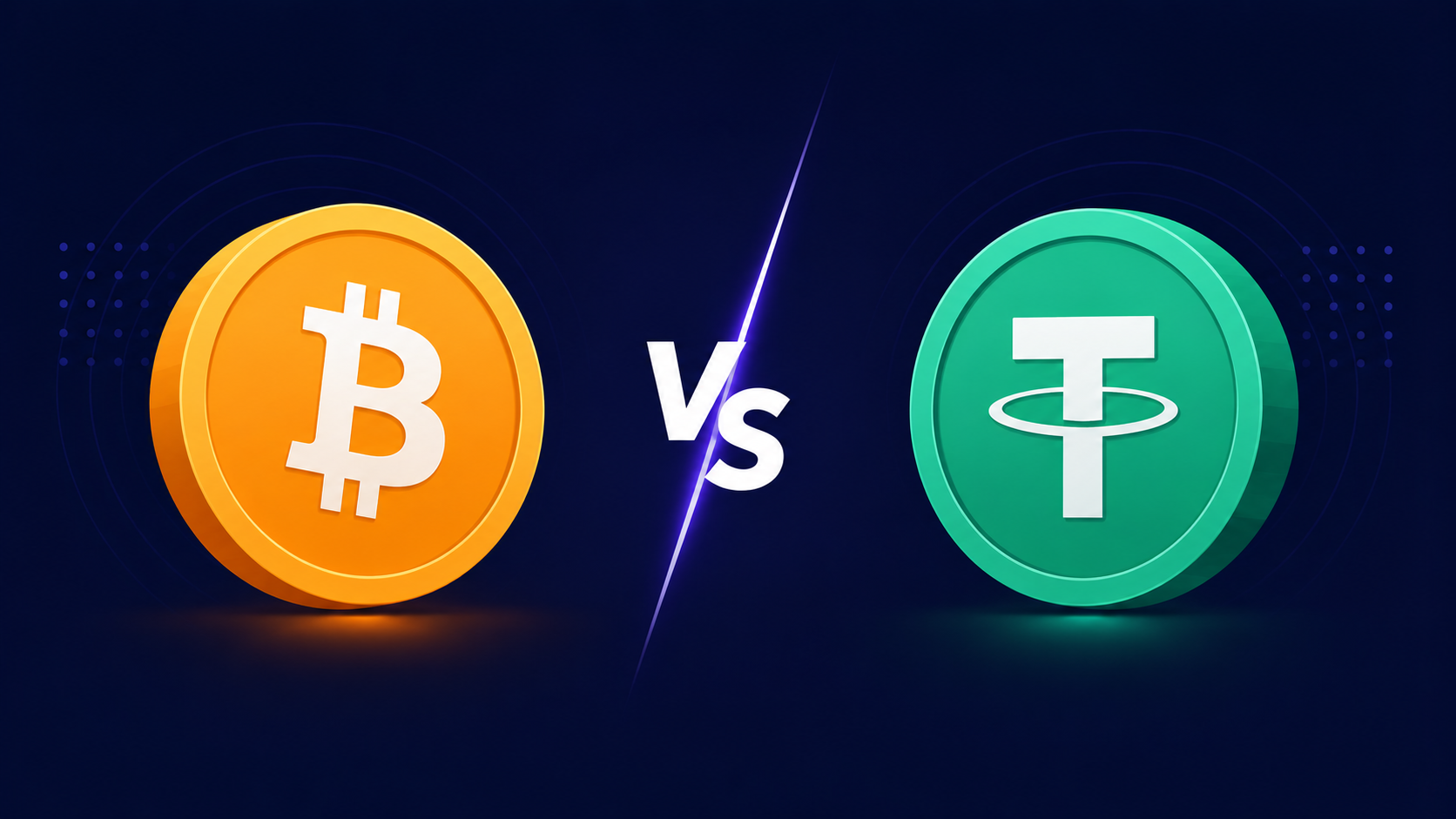
Bitcoin vs USDT: which should a merchant accept first?
For most merchants, USDT is the safer first coin to accept because it holds a stable dollar value, while Bitcoin maximizes brand recognition and reach. If you price in USD and want to receive exactly what you charged, start with USDT. If your customers are crypto-native or you want to hold some revenue as a long-term asset, start with Bitcoin. The strongest answer for nearly every store is to enable both, they serve different customers at checkout, and offering the choice reduces drop-off.
The core difference between Bitcoin and USDT
Bitcoin (BTC) is the most recognized cryptocurrency in the world; its price floats with the market. USDT (Tether) is a stablecoin pegged 1:1 to the US dollar, so one USDT is designed to always be worth about one dollar. For merchants, that distinction shapes everything about how a payment behaves at checkout: what you receive, how fast it settles, and what it costs.
Bitcoin vs USDT at a glance
| Factor | Bitcoin (BTC) | USDT (Tether) |
|---|---|---|
| Value stability | Volatile, can swing several percent in an hour | Stable, pegged ~1:1 to USD |
| Settlement speed | ~10 min per confirmation | Near-instant on TRON or Polygon |
| Network fees | Higher during congestion | Very low on TRON/Polygon |
| Customer recognition | Highest, universally known | High among crypto traders |
| Best for | Reach, holders, crypto-native buyers | USD-priced stores wanting exact value |
Bitcoin: pros and cons for merchants
Pros
- Highest brand recognition, customers trust it
- Available on every exchange and wallet
- Strong long-term store of value if you hold it
Cons
- Price volatility, a 5% swing in 30 minutes is normal
- Slower confirmation times (about 10 minutes for 1 confirmation)
- Higher on-chain transaction fees during network congestion
USDT: pros and cons for merchants
Pros
- Stable value, $49.99 today is $49.99 next week
- Instant settlement on networks like TRON or Polygon
- Near-zero fees on low-cost chains
- No conversion needed if you want to hold USD-equivalent value
Cons
- Counterparty risk, USDT is issued by Tether, a centralized company
- Less universally understood by mainstream customers
Which should you enable first?
It depends on your pricing model and tolerance for volatility.
Accept USDT first if you price in USD and want to receive exactly what you charged. There is no conversion math, no exchange-rate risk, and settlement is near-instant on TRON or Polygon.
Accept Bitcoin first if your customers are crypto-native (developers, early adopters) or you sell internationally and want to hold a portion of revenue as a long-term asset.
Does Bitcoin's volatility hurt merchants?
It can, but only if you hold. A payment is priced at the moment of checkout, so the customer pays the BTC equivalent of your USD price at that instant. The volatility risk appears afterward, while you hold the coin before converting. Merchants who want to avoid this entirely either convert BTC to fiat or stablecoin promptly, or simply accept USDT and skip the swing. With a non-custodial gateway like GriffNode, the coin lands directly in your wallet, so what you do with it next is entirely your call.
The best answer: accept both
GriffNode lets customers choose their preferred coin at checkout. Enabling both BTC and USDT covers the broadest audience. Customers who use a hardware wallet often prefer BTC; customers who trade on exchanges frequently hold USDT. Giving them the option reduces drop-off at checkout. Both settle directly to a wallet you control, with 0% per-transaction fees on a flat monthly plan and no chargebacks.
What about ETH, USDC, and others?
Add them after you have BTC and USDT working. Ethereum is worth adding if your audience includes DeFi users, and USDC is a popular second stablecoin for buyers who prefer it over USDT. Litecoin, Dogecoin and Dash are cheap, fast options some audiences favor. Start simple and expand as you see which coins your customers actually use. For setup walkthroughs see how to accept crypto payments on WooCommerce or the Shopify crypto payments guide.
Frequently asked questions
Is Bitcoin or USDT better for accepting payments?
Neither is universally better, they solve different problems. USDT gives you a stable, dollar-pegged value and near-instant low-fee settlement, which suits USD-priced stores (see accepting USDT with GriffNode). Bitcoin gives you the widest recognition and an asset you can hold. Most merchants accept both.
Does USDT avoid Bitcoin's price volatility?
Yes. USDT is pegged roughly 1:1 to the US dollar, so the value you receive stays close to the price you charged. Bitcoin's value floats with the market, so if you hold it the amount in dollar terms can rise or fall.
Which is cheaper to receive, Bitcoin or USDT?
USDT is usually cheaper to receive when sent over low-cost networks like TRON or Polygon, where fees are very small. Bitcoin on-chain fees can rise during periods of network congestion.
Can I accept both Bitcoin and USDT at the same time?
Yes. With GriffNode you can enable BTC and USDT together and let the customer pick at checkout. Both settle directly to a wallet you control with no per-transaction percentage fee.
Which crypto should a new store accept first?
If you price in dollars and want predictable value, start with USDT. If reach and recognition matter most, start with Bitcoin. Enabling both from day one covers the large majority of crypto users with little extra effort.
Summary
USDT is the safer first choice for merchants who want price stability; Bitcoin maximizes reach and recognition. Enabling both from day one covers the broad majority of crypto users with minimal extra effort, and with a non-custodial gateway, every coin lands straight in your own wallet. Start accepting Bitcoin and USDT with GriffNode.